
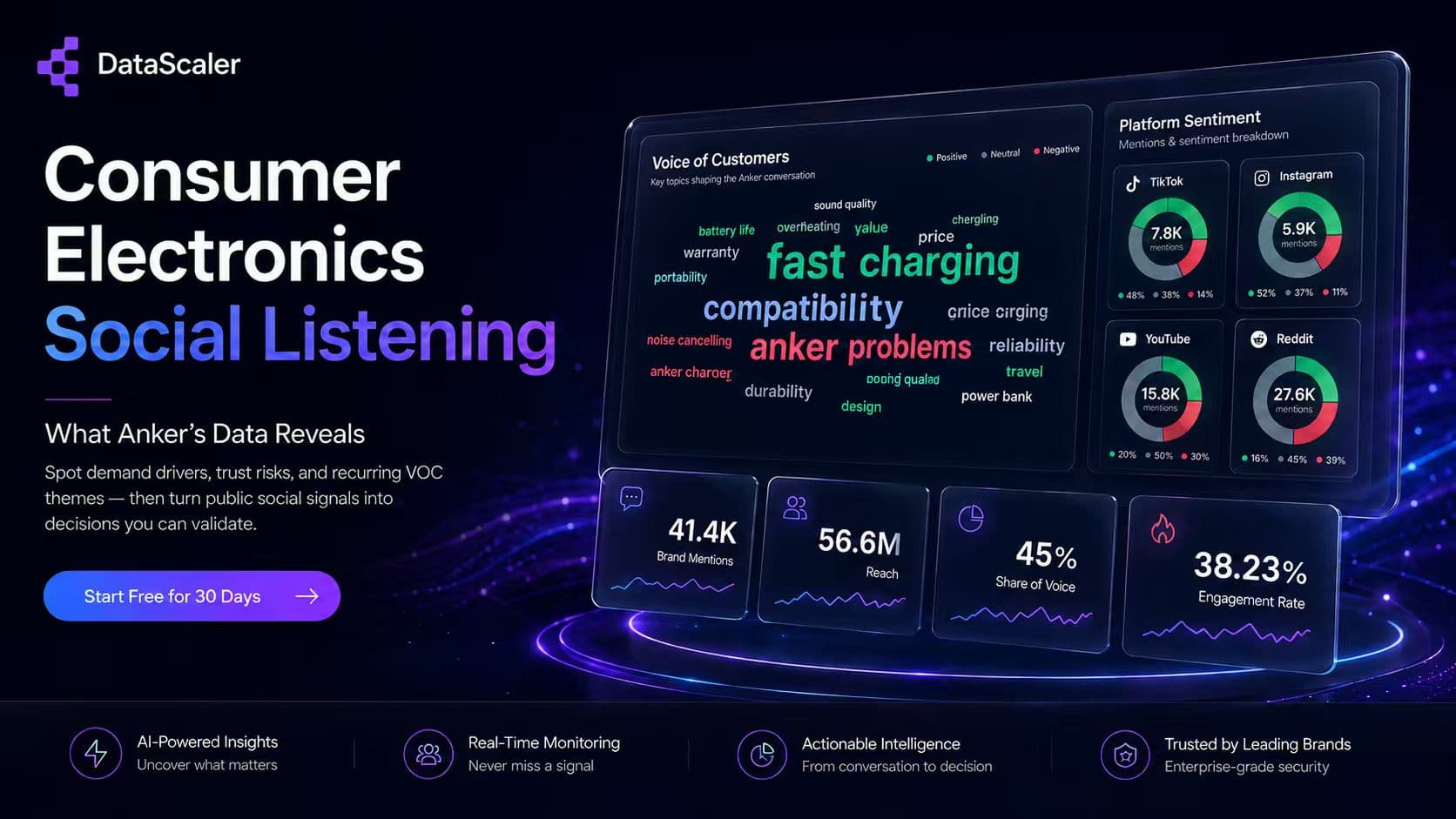
Executive summary
Useful brand intelligence is not a larger pile of posts. It should answer what is changing, why it is changing and what the team should do next.
In this example, DataScaler organizes cross-platform conversations into three decision themes: whether customers understand the product value, where trust risk concentrates, and which content signals shape purchase decisions. Every finding retains its source for fast verification.
Example finding: brand visibility is rising, but most growth is exposure-led. The conversations that influence purchase still concentrate on reliability, support experience and ease of use.
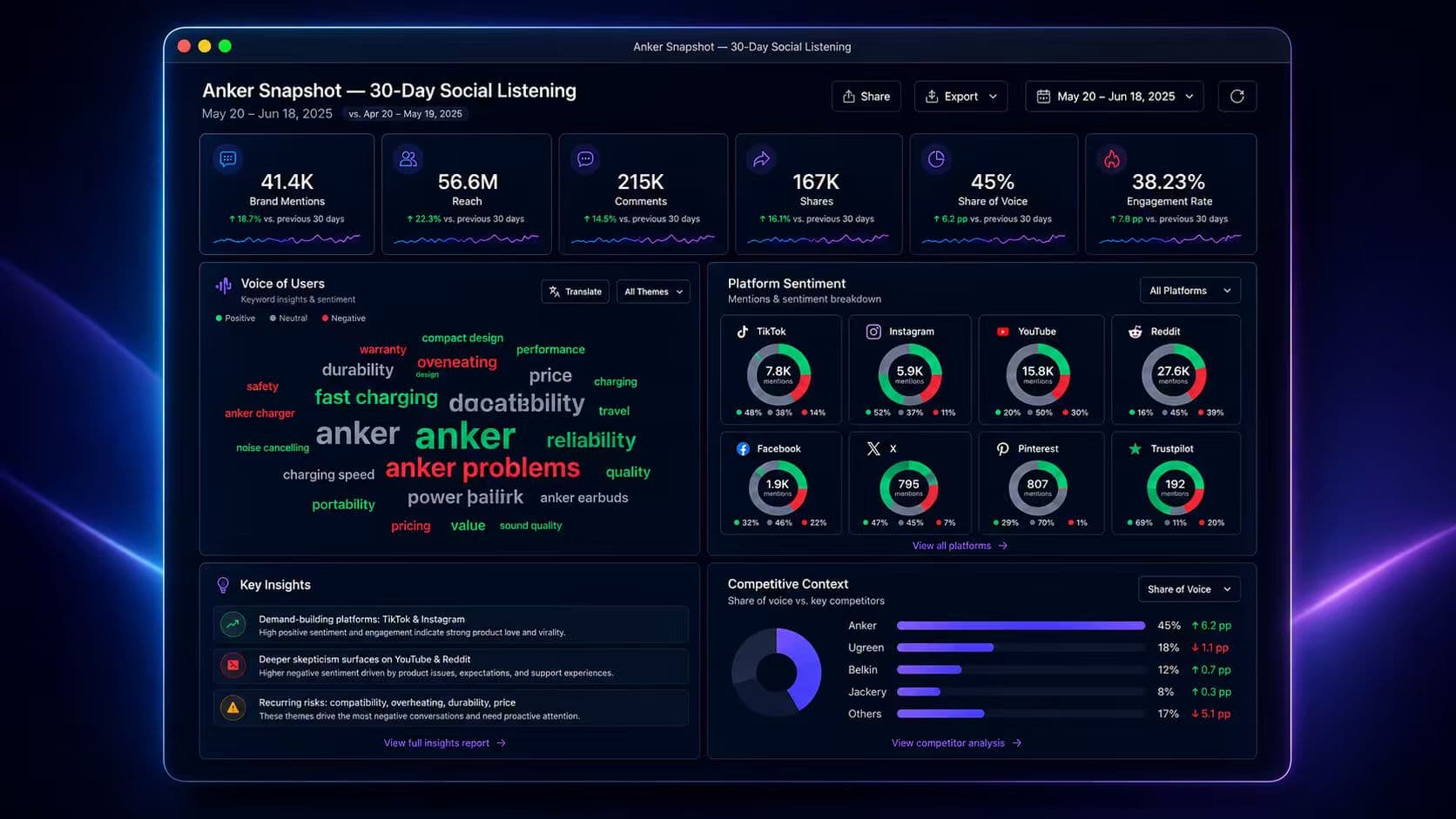
Signal snapshot
The values below are static sample data. They demonstrate how a report moves from raw signal to a decision, and do not represent live brand performance.
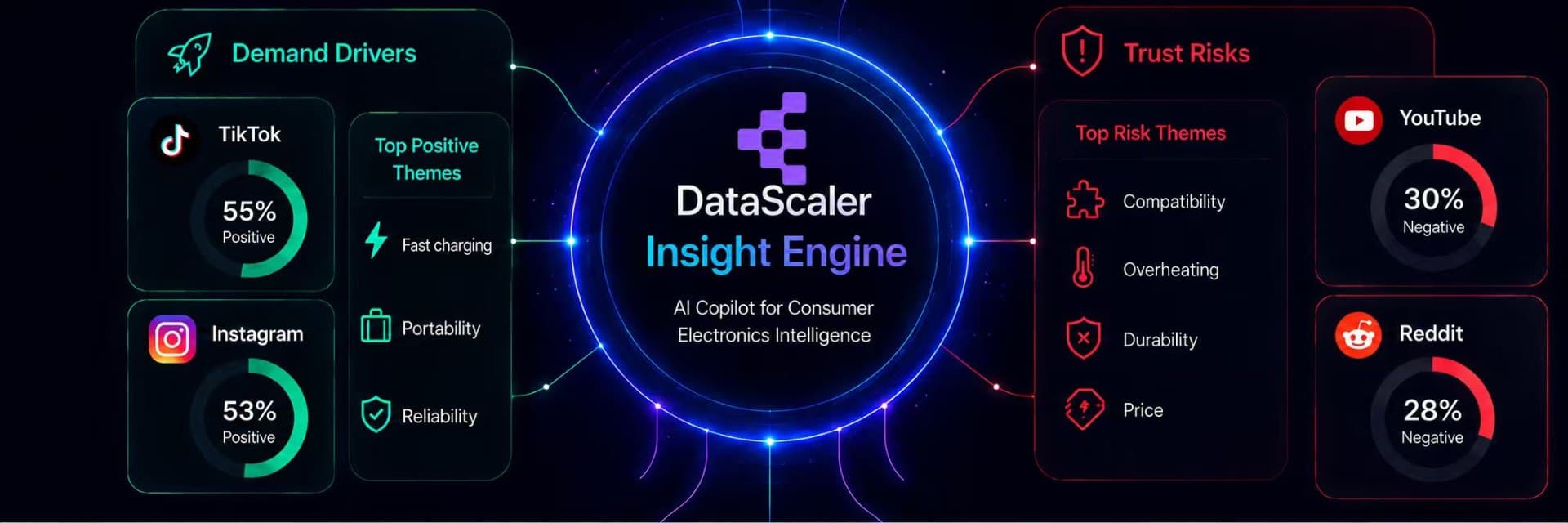
How AI forms a finding
DataScaler does not treat one highly liked comment as the market. It clusters similar expressions, then weighs source, time, engagement and semantic context.
Tracing every conclusion
Every number, finding and recommendation can be traced back to public conversations. Teams can read the pattern and inspect the exact customer context.
When comparing alternatives, users repeatedly discuss long-term reliability and repair cost.
Reviews create concentrated reach, while comments focus on real-world limitations.
Short video lifts awareness, with purchase questions centered on use-case fit.
Recommended actions
Insight matters when it enters a workflow. In this example, the next week of work becomes three clear actions.
- Content: move beyond generic feature lists and answer reliability, ease-of-use and scenario-fit questions.
- Product: add recurring friction to the VOC validation list and separate true defects from expectation gaps.
- Customer teams: standardize support and repair messaging, then track whether trust risk declines.
Want the interactive version?
Open Playground, enter a brand and experience the flow from rough signals to a complete report.
Open Playground