
Consumer Brand Observations · Issue 01 · October 12, 2026
A charger's 100W rating does not tell a buyer how much power their laptop will receive once a phone and tablet are connected. Buyers comparing Anker and Ugreen ask about that split, and about what happens when another device is plugged in. One buyer was still asking after contacting support.
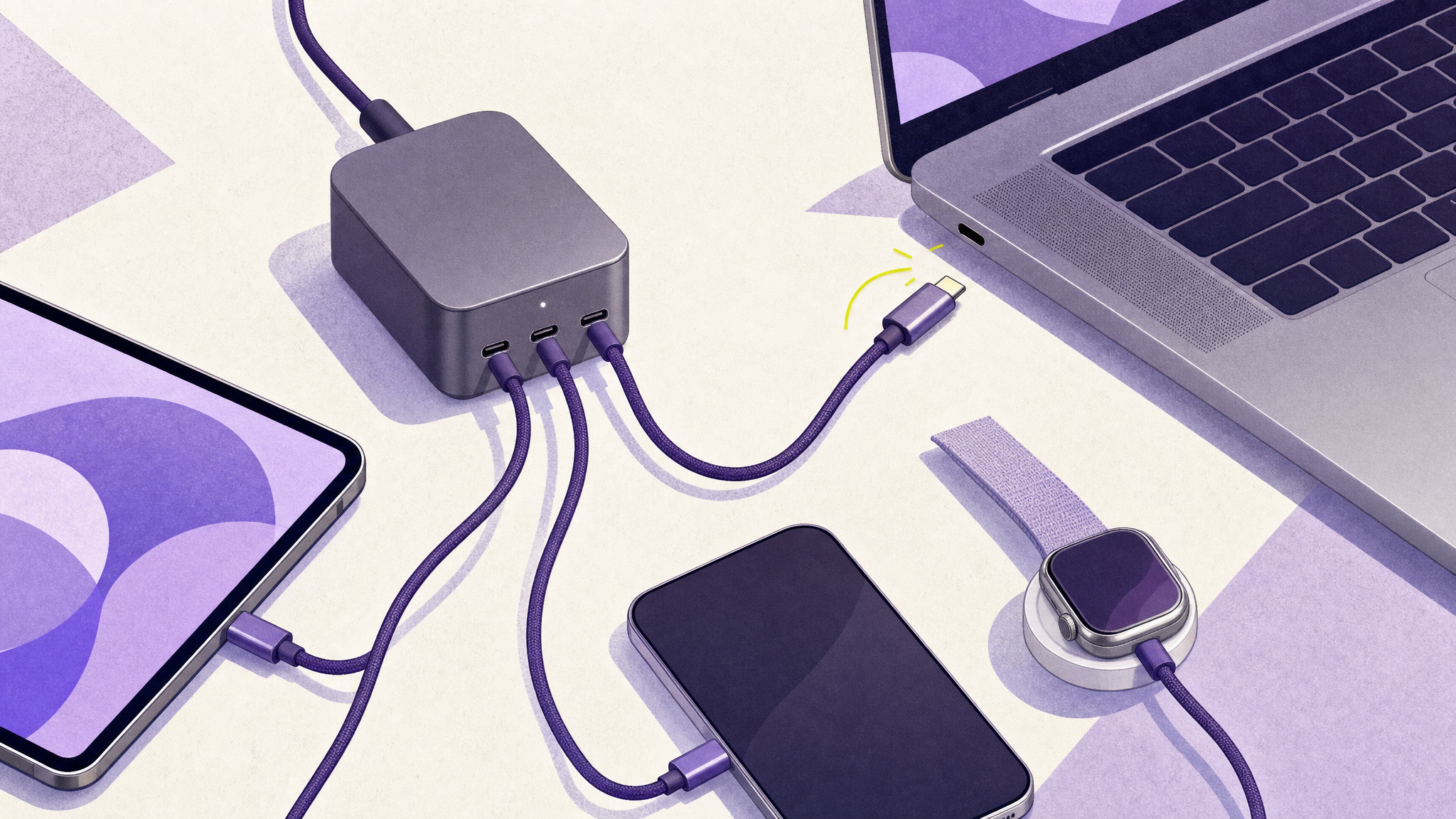
Concept illustration. The devices do not depict either brand's actual products.
AI recommended Ugreen. The buyer kept asking questions.
One Reddit user wanted a desktop charger for a MacBook Pro, Apple Duo and iPad Pro, with a port to spare. They had a specific requirement: connecting or disconnecting one device should not interrupt the others.
AI had recommended the Ugreen 500W. The buyer contacted support, then turned to Reddit with questions about how the charger would behave with their devices.
In a later update, they reported buying an Anker 250W and configuring its power allocation. Some combinations and mode changes still caused it to renegotiate power. Read the discussion and update.

Based on the linked author's account. This is neither a verified order nor conversion-rate data.
Being recommended by AI had put Ugreen on this buyer's shortlist. It had not settled their questions about everyday use. A page or video showing the requested setup would have given them something concrete to check. We cannot tell from the thread whether that would have changed their purchase.
Why praise for fast charging needs a closer look
DataScaler's UGREEN report records praise for fast charging alongside complaints about charging speed.
Report topic | Classification | Topic count |
|---|---|---|
fast charging | Positive | 57 |
multi-device charging | Positive | 17 |
charging speed | Negative | 10 |
slow charging | Negative | 6 |
Source: the UGREEN report's Voice of Customer view, accessed October 12, 2026. Topics may overlap. Counts are not unique people or failure rates; the scope is described below.
Reading the negative counts as a defect rate would be a mistake. To understand what “slow” means, we need the model, connected devices and charging conditions. A single-device review and a multi-device complaint may describe different experiences; the counts alone cannot tell us whether that explains these comments.
The four Reddit discussions used here were researched separately. They illustrate buying questions, not the individual records counted in this table.
What happens when several ports are in use?
In another discussion, a commenter wanted to charge several phones with their wife. Output from the secondary ports mattered to them. Other comments raised plug orientation and how much socket space the charger would take up. See the device-selection discussion.
“Multi-device fast charging” covers both a desk built around one laptop and a household charging several phones. A buyer still has to work out whether the port arrangement suits their use.

Illustrated use cases, not test results for either brand.
Anker's support page shows why the details matter. For its 100W, three-port charger with a smart display, the default split when two ports begin charging is 70W + 30W or 67W + 33W, depending on the ports used. Allocation can change under specified low-load conditions. Read the power-distribution guidance for this model.
Put those details beside the product claim. A short, uncut video could then show a laptop charging as a phone is connected and removed, with the model, cables and mode identified. That would answer a question a single-port peak-power test leaves open.
The model name needs to stay attached to the result. In a separate “Ugreen or Anker?” thread, a claim about interruptions prompted replies asking which model was involved. Other users described Anker behavior that challenged the broad comparison. Without the model and setup, readers could not know whether the experience applied to them. Read the disagreement.
Buyers check the return process before they need it
One buyer initially favored a five-port Ugreen 100W because it had the ports they wanted. Then they read accounts of noise and failures and began worrying about getting a replacement. They compared that concern with their impression of Anker's support. Replies went both ways: some described good Ugreen experiences; others were unhappy with Anker service. The thread did not establish what the buyer eventually bought. Read the pre-purchase concerns.
UGREEN's US page for a 100W desktop charger lists a two-year product warranty and 30-day returns. For a worried buyer, the next questions are practical: does this cover the seller I plan to buy from, and what would I have to do to make a claim? See the US product page.
Put the region and sales-channel rules where someone can find them before ordering. These discussions do not show which brand handles claims faster, but they do show a buyer trying to assess the hassle of a possible return.
What to change on the product page
Use these questions to brief one model's product-page update and its next creator review:
Buyer question | Content to add |
|---|---|
How do I connect my devices? | A diagram of common setups, with output per port, required cables and any mode restrictions. |
What happens when I plug something in or unplug it? | An uncut demonstration. Identify the model and conditions, and show any interruption. |
What do I do if there is a problem? | Return and warranty instructions for the buyer's region and sales channel. |
After publishing, ask support whether buyers still raise the same questions. If they do, check whether they found the new explanation and what it left unclear. Track use of that content alongside add-to-cart and purchases. The evidence here can guide an update; it cannot predict a conversion lift.
Sources and scope
Prepared October 12, 2026. This is a purchase-decision case study, not a brand-quality ranking or market-trend report.
- DataScaler report: UGREEN Voice of Customer view, filtered by collection time from September 12 to October 12, 2026; the selected report was completed September 24. It covers charging products and other accessories on YouTube, Pinterest, X, Facebook, Instagram and TikTok. Topics may overlap; counts do not represent unique consumers. Collection dates are not publication dates.
- Public discussions: Four historical Reddit threads and visible replies, researched separately from the DataScaler report and linked beside the relevant claims. Purchases are self-reported; orders and commenter identities were not verified. The threads do not establish a recent market trend or explain what caused a purchase.
- Product information: Anker's guidance for the specified model and UGREEN's specified US product page. Specifications and policies should not be transferred to other models, regions or sales channels. No independent product testing or measurement of sales impact was performed for this article.
Questions from brand teams
Is this evidence that Anker is better than Ugreen?
No. The discussions involve different products and setups, and the buyer who reported choosing Anker still noted power renegotiation in some conditions. A fair product comparison needs specific models tested under the same conditions.
What should a team check after finding a topic in DataScaler?
Open the linked sources. For “slow charging,” look for the devices and conditions involved. For support concerns, distinguish a customer's own experience from something they read elsewhere. The Reddit cases in this article were researched separately; a DataScaler brand preview will not necessarily reproduce them.
For the reusable process behind cases like this, use the competitive intelligence analysis guide and report template.
Enter your brand in the Playground to preview its discussion themes.